
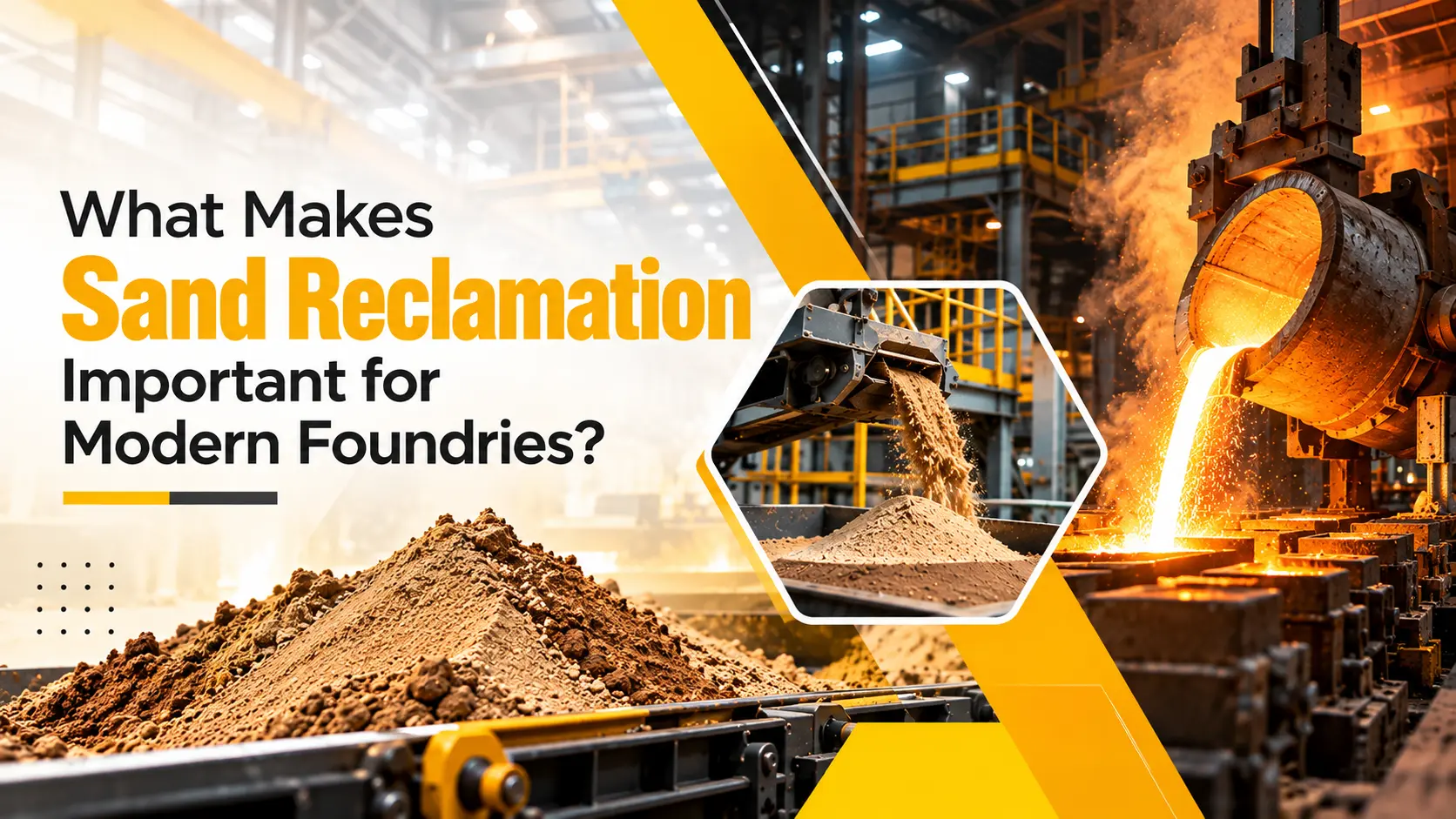
Sand is one of the most widely used materials in foundry operations, particularly for preparing moulds and cores. Once the casting process is completed, however, the sand is no longer ready for immediate reuse. It can contain binder, dust, fines and other unwanted material generated during moulding and casting. Instead of treating this used sand as waste, foundries can process it and recover suitable material for another production cycle. This is where sand reclamation becomes valuable.
A properly planned reclamation system can help foundries make better use of their existing sand while managing waste and material consumption. It can also support smoother handling of sand throughout the plant. J K Foundry Equipments provides foundry equipment and solutions designed to meet different sand processing and reclamation requirements.
What Happens to Sand After Casting?
After a casting is removed from its mould, the sand left behind has gone through considerable changes. Depending on the moulding process, it may contain residual binder, dust and fine particles. The sand may also remain at a high temperature after coming into contact with molten metal.
This material cannot always be sent directly back into the moulding process. It needs to be treated first to separate unwanted substances and prepare the usable sand for further use.
Sand reclamation is based on this simple principle. Used sand is processed so that reusable sand grains can be recovered while materials that may affect the next moulding cycle are removed.
Why Does Sand Reclamation Matter?
For a foundry handling large quantities of sand, constantly depending on fresh material can increase material consumption and operating requirements. Reclaiming suitable sand gives foundries an opportunity to make better use of the material already present in their process.
Another benefit is improved waste management. Instead of sending all used sand out of the production cycle, a portion can be recovered and prepared for reuse. This can help reduce the volume of material that needs to be discarded.
Different Processes for Different Requirements
Every foundry has its own production conditions, so the same reclamation arrangement may not work for every application. The type of binder, quantity of used sand, production capacity and required reclaimed sand quality all have a role in equipment selection.
Mechanical reclamation can be used to separate unwanted material through mechanical action. In applications where additional binder removal is required, secondary reclamation may be considered.
Thermal reclamation is another approach. It uses controlled heat to remove remaining organic binder from used sand. Cooling and classification may also be included in the overall process to bring the reclaimed sand to a suitable temperature and separate fines or dust.
Sand Handling Is Part of the Bigger Picture
A reclamation plant does not operate independently. Used sand needs to reach the reclamation equipment, while processed sand needs to move back into the appropriate part of the foundry.
This is why equipment such as conveyors, elevators, hoppers, storage arrangements, dust collection systems, sand coolers and classifiers may be integrated into a complete sand handling setup. Proper coordination between these stages can make material movement more organised and reduce unnecessary manual handling.
Plant layout also deserves attention. A system that fits naturally into the existing material flow can make daily operation and maintenance easier.
What Should You Check Before Selecting a System?
Before investing in reclamation equipment, foundry operators should understand their existing process and future requirements. The binder system and type of used sand should be considered first. The quantity of sand generated, required processing capacity and expected quality of reclaimed sand are also important.
Foundries researching sand reclamation plant manufacturers in India should therefore evaluate the complete solution, not just an individual machine. The equipment should suit the foundry's process and provide a practical flow from used sand collection to reclaimed sand reuse.
Making Better Use of Foundry Sand
Modern foundries are increasingly focused on using materials efficiently while keeping production practical. Sand reclamation can support this approach by bringing suitable sand back into the production cycle instead of treating every batch of used sand as waste.
With experience in foundry equipment and plant solutions, J K Foundry Equipments can support industries in evaluating their sand processing requirements and developing a suitable arrangement.
Conclusion
Sand reclamation can play an important role in modern foundries by supporting better sand utilisation, waste management and material handling. The right process can help recover usable sand and prepare it for another moulding cycle.
When searching for sand reclamation plant manufacturers in India, understanding the type of sand, production volume and reclamation requirements can help in selecting the right system.
Improve Your Sand Reclamation Process
Looking to improve sand recovery or plan a new reclamation setup? J K Foundry Equipments can help you discuss your foundry requirements and identify a suitable equipment arrangement.