
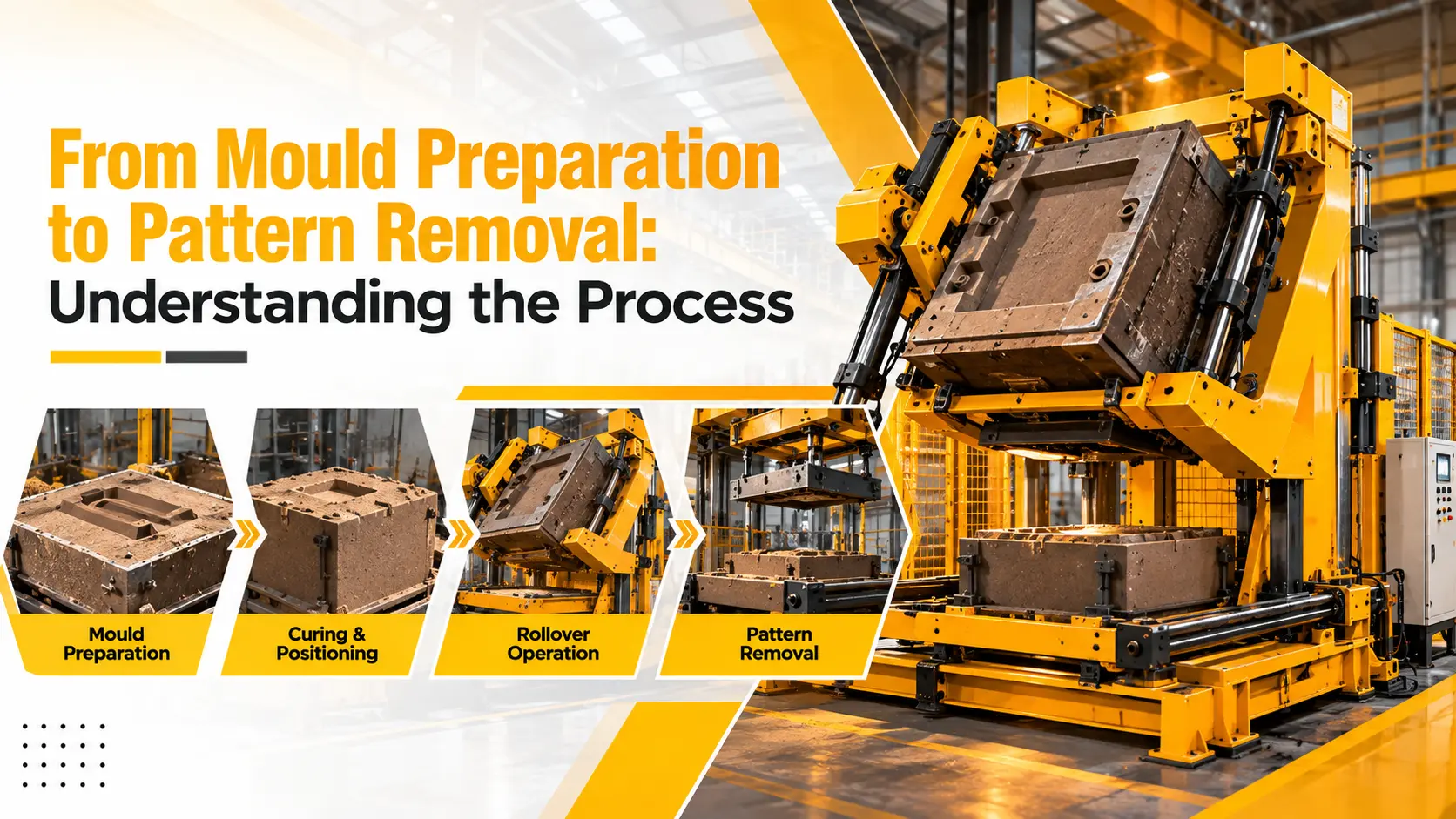
In metal casting, a properly prepared mould is important for producing a good-quality casting. But mould preparation is only one part of the process. Once the mould has been formed and cured, it needs to be separated from the pattern carefully. Rough handling during this stage can damage the mould cavity and affect the final casting. A rollover draw machine helps manage this operation by providing controlled movement for turning the mould and removing the pattern.
J K Foundry Equipments manufactures foundry equipment, including rollover draw machines designed for mould handling applications. These machines help reduce manual effort and provide better control during mould rollover and pattern removal.
Starting With Mould Preparation
The process begins with preparing the mould around a pattern. Depending on the casting method, sand and a suitable binder are used to create the required mould shape.
In no-bake moulding, sand is mixed with chemical binders and allowed to cure. Once the mould has hardened adequately, it is ready for handling. Proper curing gives the mould enough strength to withstand movement during the next stages.
Positioning the Mould
After curing, the mould needs to be positioned correctly before the pattern can be removed. The mould is placed in the rollover draw machine and secured with the clamping arrangement.
Once the mould is held firmly, the machine begins the rollover operation. Hydraulic systems provide the force required to lift and turn the mould into the required position. This mechanical process makes repeated mould handling more organised and reduces dependence on manual movement.
Understanding the Rollover Stage
During rollover, the mould changes its orientation so it can be separated from the pattern. The movement needs to be steady and controlled because sudden movement may place unnecessary stress on the mould.
For companies researching Rollover Draw Machine Manufacturers in India, factors such as hydraulic operation, clamping arrangement and mould-handling capacity are important. The equipment should also match the size and weight of the mould being handled.
Pattern Removal
Once the mould reaches the required position, the pattern can be withdrawn. This stage is known as drawing or stripping. Controlled movement helps separate the mould from the pattern while reducing the possibility of disturbing the mould cavity.
Controlled vibration can also assist when the mould does not separate easily from the pattern. It helps loosen the mould and can reduce the amount of manual force required during the stripping operation.
Where Automation Helps
Automation can make rollover and pattern removal easier to manage, particularly in repetitive foundry operations. J K Foundry Equipments manufactures rollover draw machines with features such as a PLC-operated hydraulic power pack, automatic clamping and mould-stripping sensors.
PLC-based controls can coordinate different machine functions, while automatic clamping helps secure the mould during operation. Mould-stripping sensors can support monitoring during the stripping stage and help make the machine cycle more systematic.
Selecting the Right Machine
Moulds differ in size, weight and production requirements, so the machine should be selected according to the actual application. Mould dimensions, weight, production volume, available floor space and desired level of automation should be considered before finalising the equipment.
For companies looking for rollover draw machine manufacturers in India, it is useful to consider more than machine capacity. Mould size, handling method, clamping arrangement, control features and available plant space should all be reviewed.
Conclusion
From mould preparation to pattern removal, careful handling is important at every stage. Once the mould has cured, it needs to be positioned, rolled over and separated from the pattern without disturbing the mould cavity.
A rollover draw machine brings these operations into a controlled mechanical process. Hydraulic movement, secure clamping, vibration assistance and automation can make mould handling more organised and reduce manual effort.
When evaluating rollover draw machine manufacturers in India, casting units should consider their mould dimensions, production requirements, available space and existing plant arrangement.
Planning to Improve Your Mould Handling?
Contact J K Foundry Equipments to discuss your mould size, production requirements and plant layout and explore a suitable rollover draw solution for your application.
Get a Rollover Draw Machine for Your Foundry
Talk to our experts about your mould dimensions, production volume and automation requirements.