
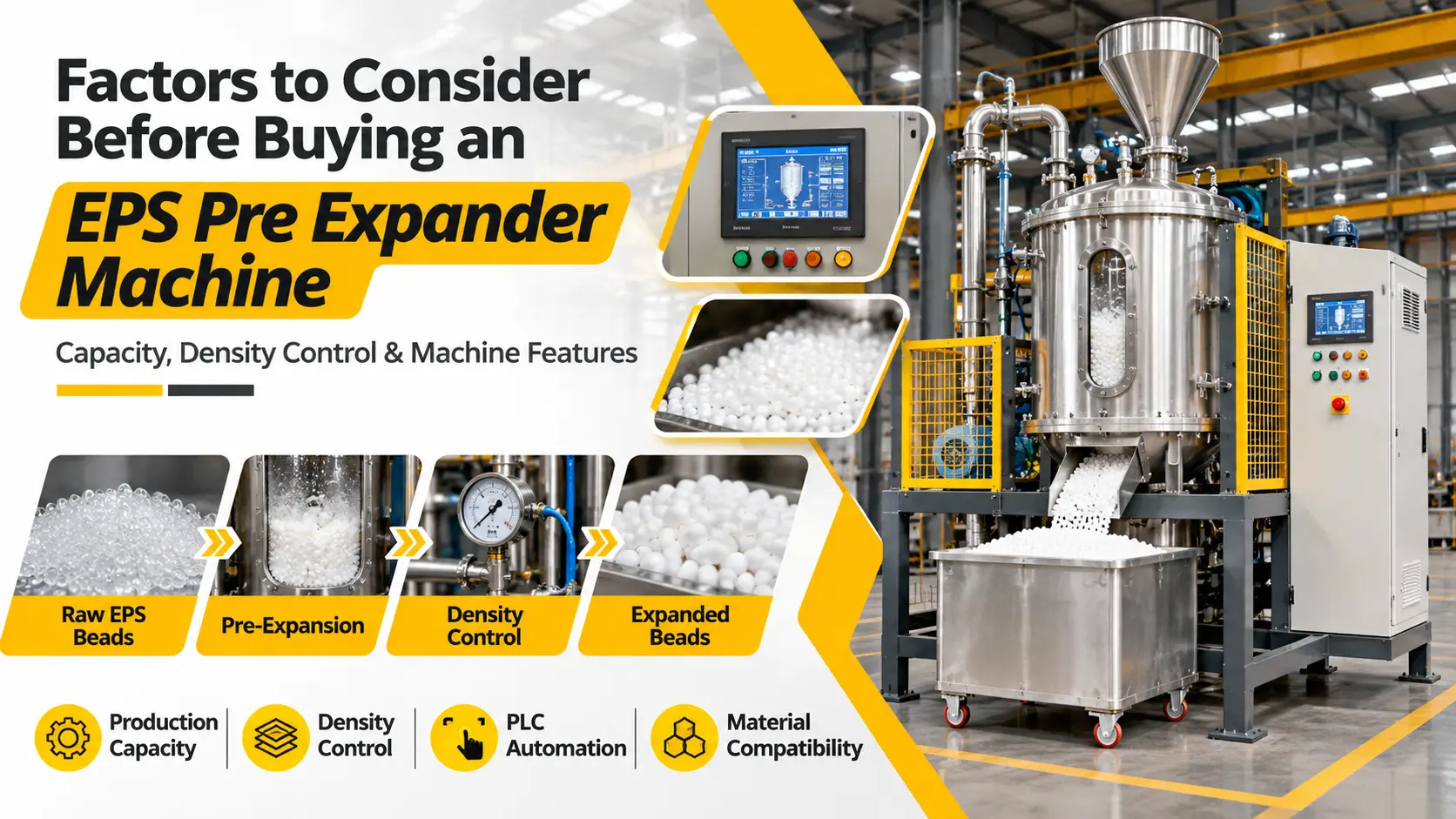
The EPS pre-expander is used to expand polystyrene (EPS) beads before moulding the foam patterns. These beads are processed before the lost foam casting process begins. The right choice of equipment is necessary for foundries to carry out the process according to their needs.
Before purchasing a machine, one should take into account its capacity, density control, suitability of raw materials and operating features. These factors will prove useful when choosing among EPS pre expander machine manufacturers.
1. Production Capacity
Production capacity is an important factor when buying an EPS pre-expander machine. The equipment should process enough raw material to meet the needs of the production line.
A machine with limited capacity may slow down production, while one with much higher capacity than required may not be a practical investment. Buyers should consider their production targets and the quantity of expanded beads needed for further processing.
2. Required Foam Density
Polystyrene beads expand when exposed to heat and steam during pre-expansion. The density of the expanded beads affects the material used to make foam patterns. Buyers should check whether the machine can achieve the density required for their production work.
It is also useful to understand how the machine manages the process settings during operation. This helps foundries check whether the equipment is suitable for their pattern-making requirements.
3. Control System and Automation
The control system is designed to enable operators to manage the pre-expansion process. The level of automation provided by the controls may depend on the design of the machine.
A Programmable Logic Controller (PLC) allows operators to control the operations of the machine through a control panel. Buyers should make sure the controls available meet their production needs.
4. Raw Material Compatibility
Determine whether the machine can be used with the raw materials used in your foundry. EPS and STMMA may require different processing conditions, so buyers should check their material requirements with the manufacturer before purchasing the machine.
If you plan to use other raw materials in future, ask whether the machine can be used with them after adjustments.
5. Load Measurement and Process Control
Load measurement helps monitor the quantity of material involved in the process. Combined with the control system of the machine, it can support accurate and repeatable operation.
Buyers need to verify how the load measuring system works and whether it satisfies their production requirements. The set of features offered can vary among different machines.
6. Installation and Space Requirements
Make sure there is sufficient space available for the machine at the production site before purchase. The size of the machine, accessibility for the operator, material handling and utilities may affect the installation process.
It is helpful to discuss the installation requirements with the manufacturer before making the purchase.
7. Maintenance and Technical Support
Regular maintenance helps keep industrial equipment in suitable working condition. Buyers should check the availability of servicing and spare parts and ask about the recommended maintenance procedures.
When comparing EPS pre expander machine manufacturers, it is also useful to check the availability of installation guidance and technical support. This helps buyers understand what assistance is available after installation.
8. Machine Specifications and Overall Cost
Price is definitely an important consideration, yet there are other aspects the buyer should take into account. Analyse the technical specifications and find out what is included in the offered price.
There may be other expenses related to installation, energy consumption and maintenance. Such an evaluation will help buyers make the right choice for their foundry.
Pre Expanding Machine Features and Specifications
J. K. Foundry offers a pre-expanding machine designed to expand EPS and STMMA raw material to the required density. The listed capacity is 20 kg/hr at a density of 25. It also includes a PLC-controlled system and a load cell.
Purchasers should verify whether the capacity, controls and materials match their production needs.
Conclusion
Points to consider while selecting an EPS pre-expander include production capacity, required density, raw material compatibility, control system, installation and maintenance. This way, the foundry can select a suitable machine according to its requirements.
Discussing these requirements with EPS pre expander machine manufacturers will help the foundry in selecting a suitable machine.
Looking for an EPS Pre Expander Machine?
Talk to J. K. Foundry Engineers about your manufacturing capacity and raw material needs.
Get an EPS Pre Expander Machine for Your Foundry
Talk to our experts about your production capacity and raw material requirements.